
How Many People Are in Jail in the USA in 2025: A Deep Dive into the Latest Figures
How many people are in jail in the USA in 2025? It’s a question that cuts to the heart of America’s complex relationship with incarceration, crime, and justice. As of March 26, 2025, the United States continues to grapple with one of the highest incarceration rates in the world, a legacy of decades of tough-on-crime policies, evolving social attitudes, and shifting legal frameworks. While exact numbers fluctuate daily, recent estimates and projections provide a clear snapshot of the state of jails and prisons across the country this year. In this article, we’ll explore the most up-to-date statistics, break down the factors driving these numbers, and shed light on what they mean for society as a whole.
The United States has long been known for its massive prison population, a figure that includes both those held in local jails and those serving time in state or federal prisons. By diving into the data, we can better understand not just the raw numbers but also the stories behind them—stories of policy, poverty, race, and reform efforts that have shaped the justice system in 2025. Whether you’re a researcher, a concerned citizen, or just curious about the state of incarceration today, this comprehensive guide will give you the answers you’re looking for.
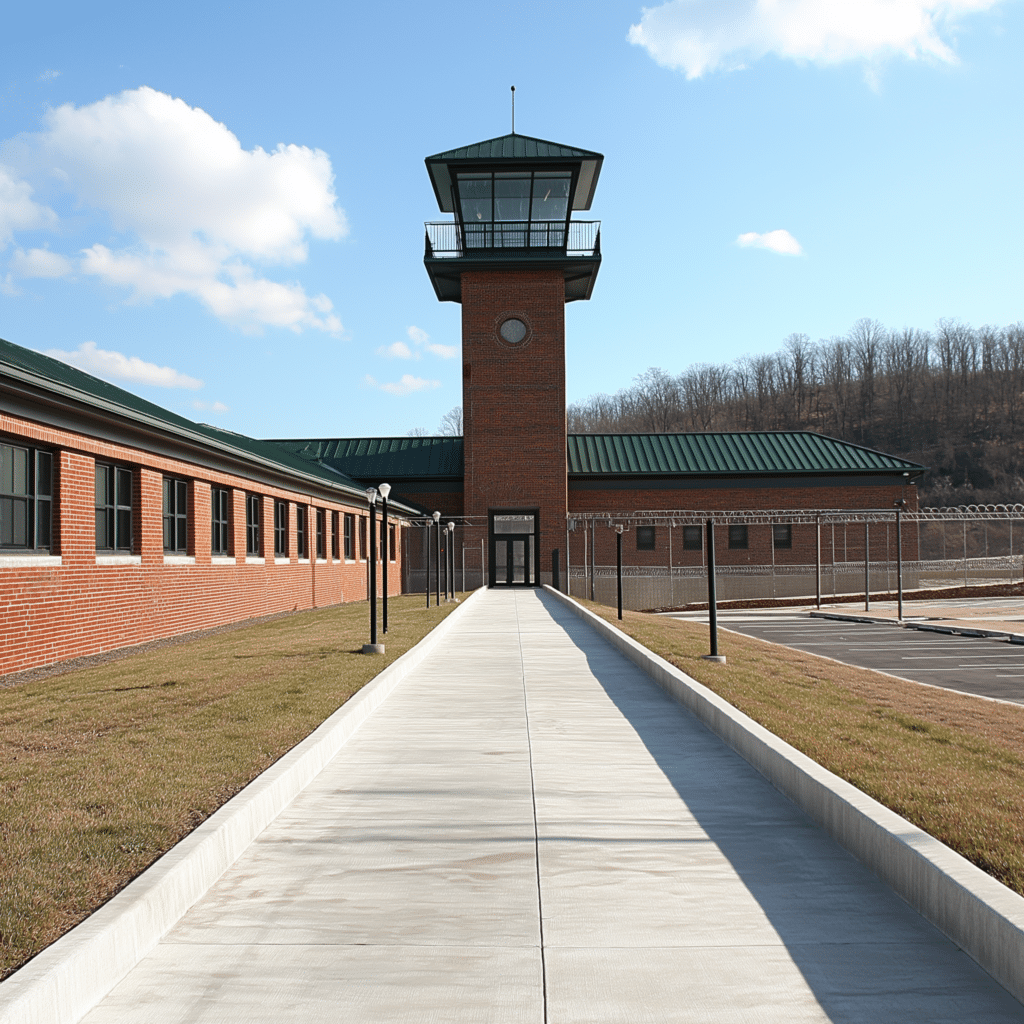
Understanding the Basics: Jails vs. Prisons in 2025
Before we get into the numbers, let’s clarify what we mean when we talk about people “in jail” versus those in prison. In the US, jails and prisons serve distinct purposes. Jails are typically operated by local governments—think county sheriffs—and house people who are awaiting trial, serving short sentences (usually under a year), or being held for other reasons like immigration violations. Prisons, on the other hand, are state or federally run facilities where individuals serve longer sentences after being convicted of crimes.
When we ask how many people are in jail in the USA in 2025, we’re often looking at a combination of these two populations, though the focus here will lean toward jail-specific figures where possible, supplemented by broader incarceration trends. The distinction matters because jail populations tend to be more fluid, with higher turnover rates, while prison populations reflect longer-term trends. Together, they paint a fuller picture of confinement in America.
Based on the most recent data available as of early 2025, the total incarcerated population—across jails and prisons—hovers around 1.9 million people, according to projections from organizations like the Prison Policy Initiative and the Bureau of Justice Statistics (BJS). However, this number is a moving target, influenced by everything from legislative changes to seasonal arrest patterns. Let’s break it down further.
How Many People Are in Jail in the USA in 2025: The Numbers
So, how many people are in jail in the USA in 2025 specifically? While comprehensive, finalized data for the full year won’t be available until later (the BJS typically releases annual reports in late 2025 or early 2026), preliminary figures and expert estimates give us a solid starting point. As of mid-2023, the BJS reported that local jails held approximately 664,200 people, a number that remained relatively stable from the previous year. Adjusting for trends observed in 2024 and early 2025—such as a slight uptick in jail populations post-pandemic—we can estimate that the number of people in local jails in 2025 is likely between 670,000 and 700,000.
This estimate aligns with data from the Vera Institute, which has tracked incarceration trends quarterly through spring 2024. Their reports suggest that jail populations in many areas have stabilized after sharp declines during the COVID-19 pandemic, when early releases and court slowdowns reduced numbers significantly. By spring 2024, jail populations were still below pre-pandemic levels (around 734,000 in 2019), but rural counties, in particular, saw a 2.2% increase between 2022 and 2024. Extrapolating this trend into 2025, we’re looking at a modest rise, though not a full return to pre-2020 highs.
When we expand the lens to include state and federal prisons, the picture grows. The Federal Bureau of Prisons (BOP) reported a population of 155,147 as of February 13, 2025, while state prisons accounted for roughly 1.2 million people at the end of 2022, per the BJS. Assuming a slight decline or stabilization in prison numbers (consistent with reform efforts and lower crime rates in some regions), the combined total incarcerated population in 2025 likely sits just under 1.9 million. Of that, jails make up about a third—a significant chunk, yet often overshadowed by prison statistics.
Factors Driving Jail Populations in 2025
What’s behind these numbers? Several key factors influence how many people are in jail in the USA in 2025. First, there’s the lingering impact of the COVID-19 pandemic. During 2020 and 2021, jail populations dropped dramatically—by as much as 25%—due to reduced arrests, court closures, and emergency releases to curb virus spread in cramped facilities. By 2022, however, the system began reverting to “business as usual,” with jail admissions climbing back up. The BJS noted a 4% increase in jail admissions from mid-2022 to mid-2023 (from 7.3 million to 7.6 million annually), a trend that likely continued into 2025 as courts cleared backlogs.
Second, bail policies play a huge role. Many of those in jail—about 70% as of mid-2023—are unconvicted, meaning they’re awaiting trial or sentencing. High bail amounts, which disproportionately affect low-income individuals, keep people behind bars longer than necessary. Advocates argue this contributes to overcrowding and unnecessary detention, a problem that persists in 2025 despite reform efforts in some states.
Third, crime trends matter. While violent crime rates have dropped since 2022 (down to 380.7 per 100,000 people), property crimes like larceny have ticked up slightly (7.4% in 2022). These shifts influence arrest rates and, consequently, jail populations. Cybercrime, too, is on the rise—97 victims per hour, per some estimates—though it’s less likely to result in jail time compared to traditional offenses.
Finally, demographic shifts are at play. The jail population is aging, with more older adults (over 55) incarcerated than ever before, straining facility resources. Racial disparities also persist: Black Americans, who make up 12% of the US population, accounted for 26% of jail inmates in 2022, a gap that hasn’t narrowed significantly by 2025.
How Many People Are in Jail in the USA in 2025 by Region
Jail populations aren’t uniform across the country—they vary widely by state and even county. In 2025, states like Texas, California, and Florida likely lead in total incarcerated numbers, given their large populations and historically high incarceration rates. Texas, for instance, housed over 153,000 state prisoners in 2020, with additional tens of thousands in local jails. California and Florida follow with significant jail and prison populations as well.
On the flip side, states like Vermont, Maine, and New Hampshire boast some of the lowest incarceration rates—under 200 per 100,000 people—thanks to smaller populations and progressive justice policies. Rural areas, however, are seeing faster jail growth than urban centers. The Vera Institute notes a 2.2% rise in rural jail populations from 2022 to 2024, a trend likely continuing into 2025 as urban areas maintain stricter bail reforms.
The Bigger Picture: Implications and Reform Efforts
So, what does it mean that roughly 670,000 to 700,000 people are in jail in the USA in 2025, with nearly 1.9 million incarcerated overall? For one, it underscores America’s outlier status globally. The US, with 5% of the world’s population, holds 20% of its prisoners—a stark contrast to nations like China, which has fewer inmates despite a population four times larger.
This mass incarceration comes at a cost. States spend billions annually—up to $69,355 per inmate in places like New York—on corrections, straining budgets that could fund education or healthcare. Overcrowding remains an issue, with some facilities operating above capacity, leading to health risks and tension. And high recidivism rates—67.8% of released prisoners rearrested within three years, per a 2005 BJS study—suggest the system isn’t breaking cycles of crime.
Reform efforts are underway, though. The First Step Act of 2018 continues to influence federal sentencing, while states like California and New Jersey have overhauled bail systems to reduce pretrial detention. Grassroots movements push for decarceration, arguing that many in jail—especially the unconvicted—could be safely released or diverted to community programs. Yet progress is slow, and 2025 shows a system still entrenched in its punitive roots.
Conclusion: What the Numbers Tell Us
How many people are in jail in the USA in 2025? Based on the latest estimates, between 670,000 and 700,000 sit in local jails, part of a broader incarcerated population nearing 1.9 million. These figures reflect a nation wrestling with its past and present—a mix of policy legacies, societal challenges, and halting steps toward change. As data continues to roll in throughout 2025, we’ll get an even clearer view, but for now, this snapshot reveals both the scale of incarceration and the urgent questions it raises.
If you’re interested in digging deeper, keep an eye on updates from the BJS, Prison Policy Initiative, and Vera Institute. The story of America’s jails and prisons is far from over—and understanding it starts with knowing the numbers.
