How Many People in Jail Are Awaiting Trial? A 2025 Deep Dive
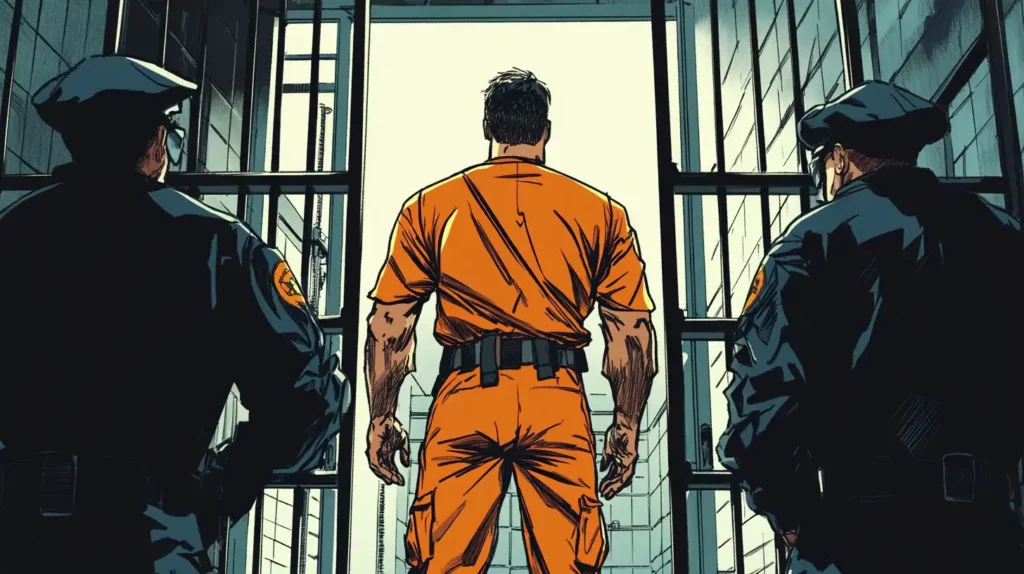
How many people in jail are awaiting trial? It’s a question that shines a spotlight on a staggering reality in the United States: on any given day in 2025, hundreds of thousands of people sit behind bars, not because they’ve been convicted, but because they’re still waiting for their day in court. As of March 26, 2025, the latest estimates suggest that roughly 670,000 individuals are held in local jails nationwide, based on trends from the Bureau of Justice Statistics (BJS). Of those, a whopping 70%—around 469,000 people—are unconvicted, meaning they’re legally innocent, locked up while awaiting trial or resolution of their cases. This pretrial population is the backbone of America’s jail system, and understanding its scale reveals a lot about justice, fairness, and the challenges of reform.
Jails—those county- or city-run facilities—process about 7.6 million admissions annually (BJS, 2023), a churn that dwarfs the 469,000 who enter state or federal prisons each year. Most of these jail inmates aren’t serving long sentences; they’re in limbo, caught between arrest and adjudication. For many, it’s a matter of money—unable to pay bail—or systemic delays that stretch weeks into months. In this guide, we’ll unpack the numbers, dig into why so many are detained pretrial, and explore what it means for the people and communities affected in 2025.
The Numbers: How Many People in Jail Are Awaiting Trial Today?
Let’s get to the core question: how many people in jail are awaiting trial in 2025? The most recent hard data comes from mid-2023, when the BJS reported 664,200 people in local jails, with 467,600—or 70%—unconvicted and awaiting court action or held for other reasons (like probation violations or ICE holds). Adjusting for trends like a slight post-pandemic rise (4% increase from 2021 to 2022, per BJS), the total jail population likely hovers between 670,000 and 700,000 in early 2025. That puts the pretrial number at approximately 469,000 to 490,000—a figure consistent with historical patterns and expert projections.
This isn’t a new phenomenon. The Prison Policy Initiative notes that the pretrial population has ballooned 433% since 1970, hitting 64% of jail inmates by 2015. By 2025, that share holds steady at around 70%, reflecting a system reliant on detention over release. On any given day, these 469,000-plus people dwarf the 196,600 convicted jail inmates (BJS, 2023), underscoring a key truth: jails are less about punishment and more about waiting—often for those too poor or powerless to get out.
Breaking it down further, the Vera Institute highlights that 32% of people booked into jail earn under $10,000 annually, yet median felony bail is $10,000—meaning many stay locked up simply because they can’t pay. Add in holds from agencies like ICE (44,000 detained in 2022, per Prison Policy) or mental health facilities (thousands languishing, per recent studies), and the pretrial tally swells beyond basic arrests. It’s a snapshot of a system in overdrive, processing 7.6 million admissions but releasing far fewer.
How Many People in Jail Are Awaiting Trial by State and Region?
The pretrial population isn’t spread evenly—geography plays a huge role. So, how many people in jail are awaiting trial across different states in 2025? The answer varies, driven by local policies, crime rates, and bail practices.
Take Illinois, where 89% of jail inmates were unconvicted in 2019 (Prison Policy, 2023)—one of the highest rates nationwide. With reforms like the 2021 Pretrial Fairness Act phasing out cash bail, that share might dip by 2025, but backlogs (256 days average for felony cases, per 2021 National Center for State Courts) keep numbers high. Contrast that with states like Nebraska or North Dakota, where over 80% of jail populations were pretrial in 2013—likely similar in 2025, given slow reform uptake.
Big states dominate raw numbers. California’s 33 counties held 5,800 unsentenced inmates for over a year in 2021 (CalMatters), some for five years-plus, suggesting thousands still await trial in 2025—perhaps 50,000–60,000 of its 70,000+ jail population. Texas, with over 153,000 state prisoners in 2020 and a hefty jail count, likely has 60,000–70,000 pretrial detainees, factoring its 70% unconvicted rate. Florida and New York follow, each with tens of thousands, per USAFacts 2022 data adjusted for growth.
Rural areas buck trends. The Vera Institute’s 2024 report shows a 2.2% jail population rise in rural counties since 2022—many pretrial—while urban centers like NYC (64% pretrial in 2015, per Vera) stabilize. Nationally, the 469,000–490,000 estimate holds, but local quirks—like Kentucky’s risk-based bail or New Jersey’s bail elimination—shift the mix.
Why So Many? The Drivers Behind Pretrial Detention
Why are so many people in jail awaiting trial in 2025? It’s a cocktail of policy, poverty, and systemic strain. First, cash bail is the elephant in the room. The Prison Policy Initiative pegs 467,600 pretrial detainees daily in 2023, many stuck because they can’t afford median bails—$10,000 for felonies, $2,500 or less for misdemeanors in NYC (Vera, 2023). A 2013 Drug Policy Alliance study found 40% of New Jersey’s jail population couldn’t pay, a pattern holding into 2025 despite reforms.
Second, court delays drag it out. The average felony case took 256 days in 2021 (National Center for State Courts), worsened by COVID backlogs—California’s longest wait hit 4,269 days (CalMatters, 2021). In 2025, caseloads swell—Sacramento County DA attorneys juggle 400 each, up from 120 pre-pandemic—keeping people locked up longer.
Third, “holds” pile on. ICE detains 44,000 (Prison Policy, 2022), and thousands with mental illness wait months for hospital beds, per recent studies—jailed not for crimes but system failures. Racial disparities amplify it—43% of pretrial detainees are Black (Vera, 2024), three times the rate of whites, reflecting bias at every stage.
Crime trends play a role, too. Violent crime’s down (380.7 per 100,000, FBI 2022), but property offenses rose 7.4%—low-level busts that clog jails. Add an aging population (more over-55s) and health needs, and the pretrial tally sticks stubbornly high.
The Human Cost: Who’s Affected?
Behind the numbers are people. A mom in Sacramento, jailed two years pretrial for a car theft charge, battles COVID in custody while her family prays (CalMatters, 2021). A San Francisco man waited six years for a burglary trial, released on a plea in 2020—years lost. These aren’t outliers—5,800 Californians waited over a year in 2021, 332 over five years. Nationally, 40% of jail deaths hit within a week of booking (Social Policy Lab, 2023), often pretrial.
Families feel it—5 million kids have a jailed parent (2025 estimate), losing $13,000 yearly in income (Prison Policy, 2015). Employment tanks—pretrial detention cuts job prospects, per a 2013 Arnold Foundation study—while conviction odds rise 18% from guilty pleas under pressure (Social Policy Lab, 2023). It’s a cycle hitting the poorest hardest.
How Many People in Jail Are Awaiting Trial Unnecessarily?
Could some of these 469,000–490,000 walk free? How many people in jail are awaiting trial when they don’t need to be? Advocates say plenty. The Pretrial Justice Institute notes 95% of jail growth from 2000–2014 was pretrial—three-quarters nonviolent, per the National Conference of State Legislatures. A 2013 BJS report found one-third of felony defendants aren’t convicted—meaning 150,000–160,000 of today’s pretrial crowd might be innocent.
Reforms prove it. Cook County’s 2020 bail order freed 3,000 yearly (JFA Institute), with no safety spike. Kentucky’s risk assessments and New Jersey’s bail elimination cut pretrial numbers—suggesting thousands nationwide could be released with supervision, not cells. Yet bondsmen lobby hard—pushing laws in Texas and California to keep cash bail alive, per Prison Policy 2023—locking in the status quo.
Reform and the Road Ahead
Change brews. California’s Supreme Court ruled in 2021 that unaffordable bail can’t justify detention— echoed in Illinois’ 2021 reforms. NYC’s pretrial supervision grew, cutting jail time (Vera, 2023). But progress lags—35 states saw prison rises in 2022 (BJS), and jail trends mirror it. A 31% jail drop in 2020 (COVID releases) didn’t spike crime, hinting at over-reliance—yet 2025’s 70% pretrial rate shows inertia.
The Prison Policy’s 2025 reform list—34 ideas like ending cash bail—gains traction, but political will falters. Trump-era policies boosted private jails (Brennan Center, 2023), countering Biden’s 2021 private prison cuts. The BJS’s 2025–2026 Jail Census might sharpen the picture, but for now, it’s a waiting game—for data and detainees alike.
Conclusion: A System in Waiting
How many people in jail are awaiting trial? In 2025, it’s 469,000–490,000—70% of the 670,000–700,000 in local jails—legally innocent, caught in a web of bail, delays, and holds. It’s a number dwarfing the convicted, costing $17 billion yearly (Nemann Law estimate), and scarring lives—40% dying early, millions of kids left behind. Want to help? Push for bail reform, track local stats, or just spread the word. Until then, America’s jails remain a holding tank for justice delayed—and too often denied.